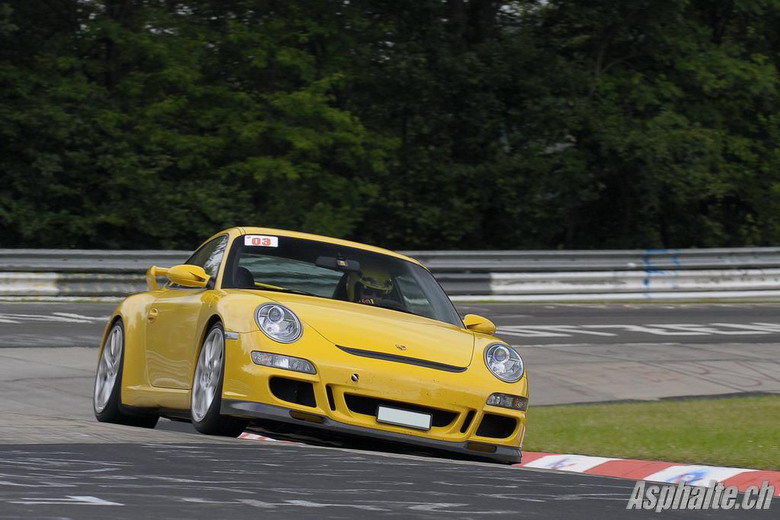
It is my third 911 and I am still getting used to the rear engine layout balance. In the glorious fast sweepers of the Nordschleife, Porsche’s development work shows with a perfect balance between body control and compliance for the many vicious bumps that pave green hell. Modern Porsches are well behaved, but caution is still required. Mid corner throttle lifts in fast corners remain an adrenaline-inducing experience. In slower turns, the key is in timing the transition from breaking to acceleration. Late breaking followed immediately by generous acceleration. Get it right and the front wheels lock into imaginary rails and carve through the corner while the rears dig in. Miss it and the front will wash wide like a sleigh. Fascinating to practice on track but such technique seems far fetched for road use given the necessary safety margin.
I fiddled a lot with the exhaust system, frustrated by the artificial transitions induced by the pair of pneumatic valves. Disabling the system to keep them open generates an unbearable drone at 2500 rpm. A satisfactory compromise is to keep one open by disconnecting and plugging the vacuum line, and keep the other side stock. This simple tweak gives more character between idle and 3000 rpm, a sort of rumbling drumbeat that dresses a bit this part of the rev range.
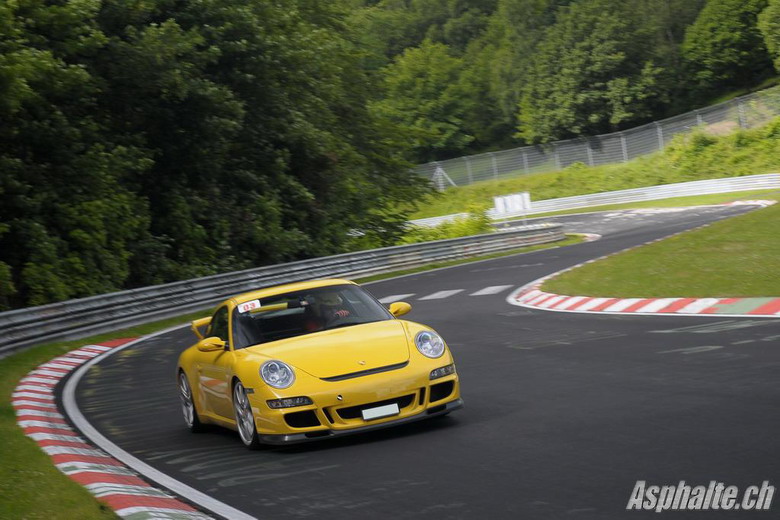
No news-good news in the reliability department since the replacement of the RMS (Rear Main Seal, located between the engine block and the gearbox. There has not been recurrence since, but since the problem seems more prevalent on north American cars for mysterious reasons, european air must have been the cure. The car has been trouble free otherwise. The clutch has had a tendancy to studder when warm since new, and rear brakes still sound like a freight train at times, no change there. The interior still squeaks occasionally in right A and C regions, unacceptable when new, tolerable now that the car has miles under the belt. The Tire Pressure Monitor has drifted and now shows values 0.3 bar (4.3 PSI) lower than reality. Warnings are annoying, but ttttdifferential indications are still valuable, and the system has already warned me of two flat tires before I would found by myself in unpleasant ways. Good marks to alcantara used on the steering wheel, seats and levers, not a hint of wear. Oil consumption is negligible, about 0.1L per 1000km.